ResourceAI · Corporate real estate

Put AI to work in corporate real estate.

Resource helps CRE teams choose the right opportunities, build practical capability, and implement controlled workflows around the documents, decisions, and processes they already manage.

A useful place to start: one team priority, recurring workflow, or learning goal. Resource will help frame the next useful step.

  • CRE-specific
  • Platform-neutral
  • Human-approved

From opportunity to operating practice

  1. 01
    Discover

    Readiness, priorities, and decision rights

  2. 02
    Enable

    CRE AI learning and practical application

  3. 03
    Implement

    Controlled workflows built around real work

  4. 04
    Sustain

    Ownership, adoption, governance, and improvement

Start where the team is. Build only what the work can support.

Why ResourceAI

AI becomes useful when it improves a real decision or workflow.

General AI education can explain the tools. It rarely shows a corporate real estate team how to turn a requirements brief, proposal set, project update, facilities dataset, or portfolio question into reliable work.

ResourceAI closes that gap with CRE context, source discipline, clear review points, and hands-on implementation.

01 Start with the CRE problem

Define the decision, audience, sources, constraints, and owner.

02 Build a reviewable method

Structure the inputs, output contract, controls, and human review.

03 Put it into practice

Test representative work, document ownership, and improve over time.

What we do

A practical path from AI interest to repeatable work.

Engagements can begin with a single team question or connect across the full service arc.

01

Discover

AI strategy and readiness

Clarify approved tools, data boundaries, recurring work, decision rights, and the opportunities worth pursuing first.

  • Readiness and operating context
  • Workflow opportunity inventory
  • Value, feasibility, risk, and ownership
  • Priorities and measures of success
03

Implement

Workflow Accelerator

Turn a priority process into a controlled workflow with defined sources, owners, outputs, review points, and acceptance criteria.

  • Workflow mapping and selection
  • Skills, assistants, and automations
  • Representative testing and failure review
  • Ownership, maintenance, and escalation
04

Sustain

Adoption and governance

Support the people using the work, clarify accountability, and measure whether the method is actually improving.

  • Role-based support and office hours
  • Human-review and governance practices
  • Quality, adoption, and workflow measures
  • Ongoing improvement and change ownership

AI across CRE

The work changes across the lifecycle. The method should travel with it.

AI is not a separate real estate activity. It can support each stage when the sources, output, controls, and human decision are clear.

  1. 01

    Plan

    Strategy and requirements

    Requirements brief with assumptions and open questions
  2. 02

    Transact

    Compare and decide

    Decision brief, proposal comparison, and risk register
  3. 03

    Deliver

    Design and build

    Action register, issue tracker, and executive update
  4. 04

    Operate

    Facilities and workplace

    Ticket analysis, recurring patterns, and operating playbook
  5. 05

    Optimize

    Renew, expand, or exit

    Scenario analysis and portfolio decision memo

Flagship program

AI Upskilling for Corporate Real Estate

Four practical sessions help CRE professionals apply AI to the documents, decisions, and workflows they manage every day.

Modules
Four live sessions
Length
60–90 minutes each
Format
Prepared example + hands-on application
01

Understand

AI Foundations for Corporate Real Estate

Build confidence, identify appropriate CRE tasks, and learn how to give AI the role, objective, constraints, sources, and required format.

Leaves with

CRE prompt framework, quality checklist, and a personal list of recurring tasks worth testing.

02

Apply

From Information to Decision-Ready Work

Work across documents, data, research, email, spreadsheets, PDFs, images, and meetings while preserving sources and open questions.

Context PacketSource StackOutput Contract
Leaves with

Three working templates and one completed, reviewable CRE artifact.

03

Standardize

From One Good Result to a Repeatable Workflow

Map a recurring task, package instructions and examples, define acceptance criteria, and place human review where it belongs.

Leaves with

Workflow scorecard, workflow canvas, reusable template, and a first role-specific workflow.

04

Scale

Implement, Govern, and Scale

Set quality thresholds, permissions, stop conditions, ownership, and measures for work that should—and should not—be automated.

Leaves with

Evaluation rubric, governance checklist, ownership plan, and implementation-ready workflow concept.

What participants receive

Working materials—not a slide about the work.

Participants leave with practical playbooks, templates, and review tools organized around the learning journey and the lifecycle of a space.

  • CRE prompt and pattern library
  • Source-grounding and output templates
  • Workflow-selection and implementation tools
  • Evaluation and human-review checklists
  • Lifecycle-stage playbooks

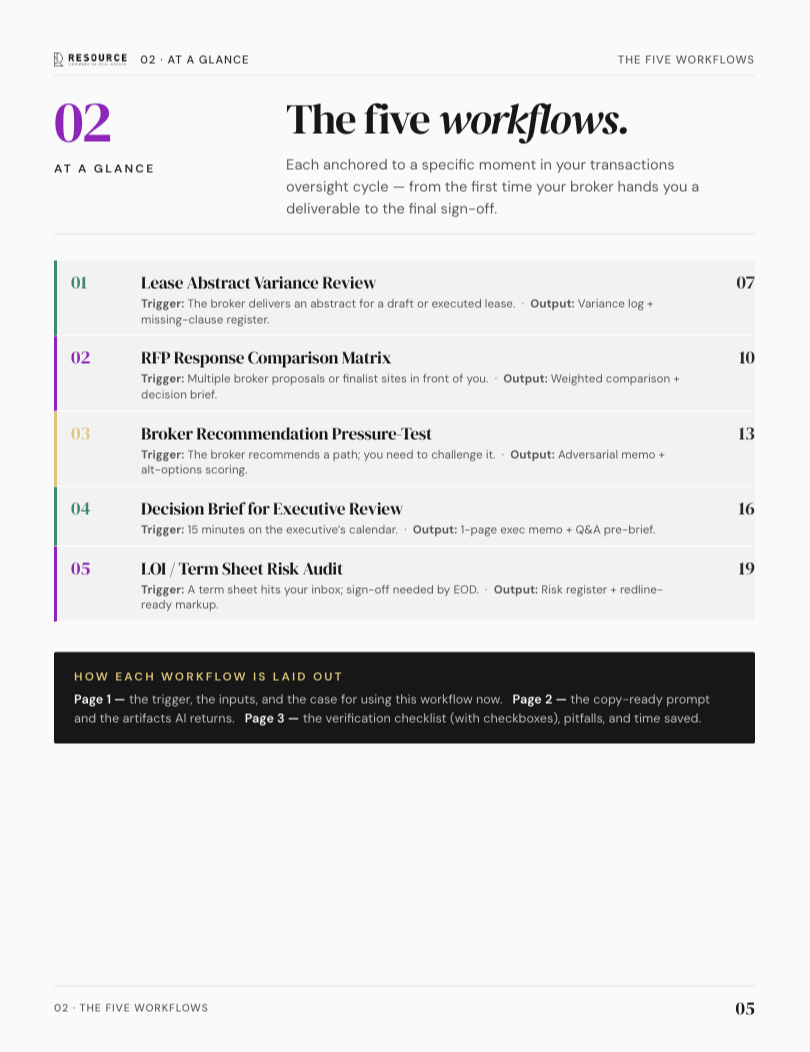
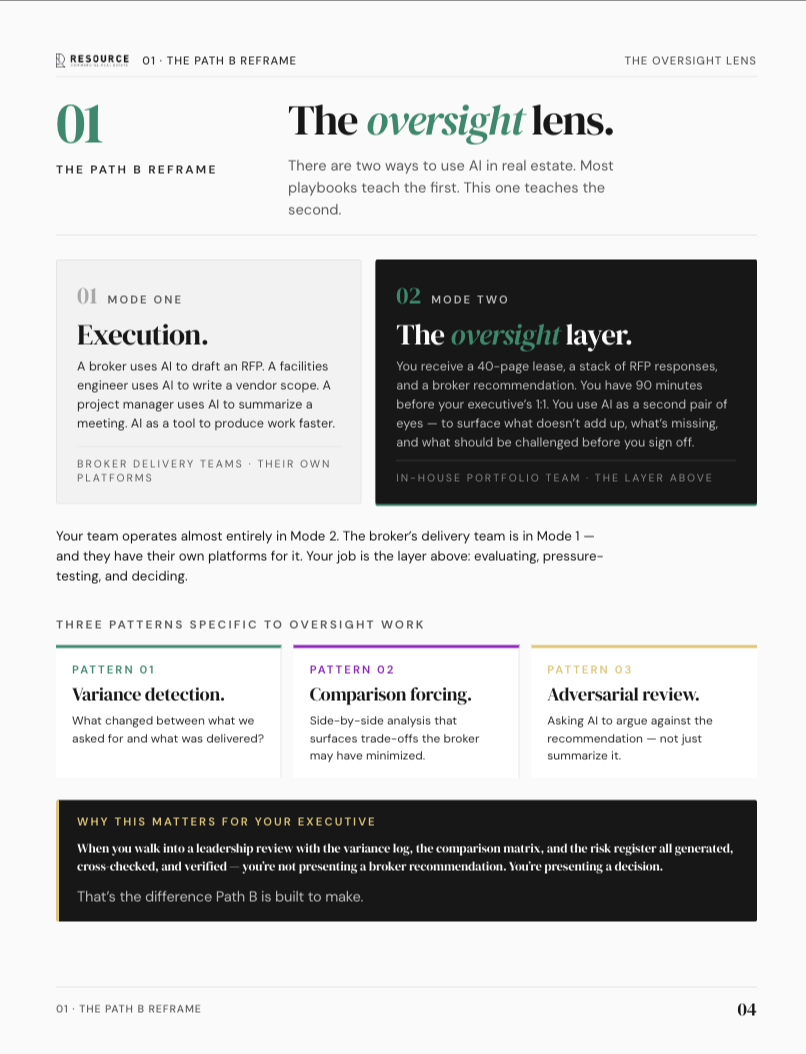
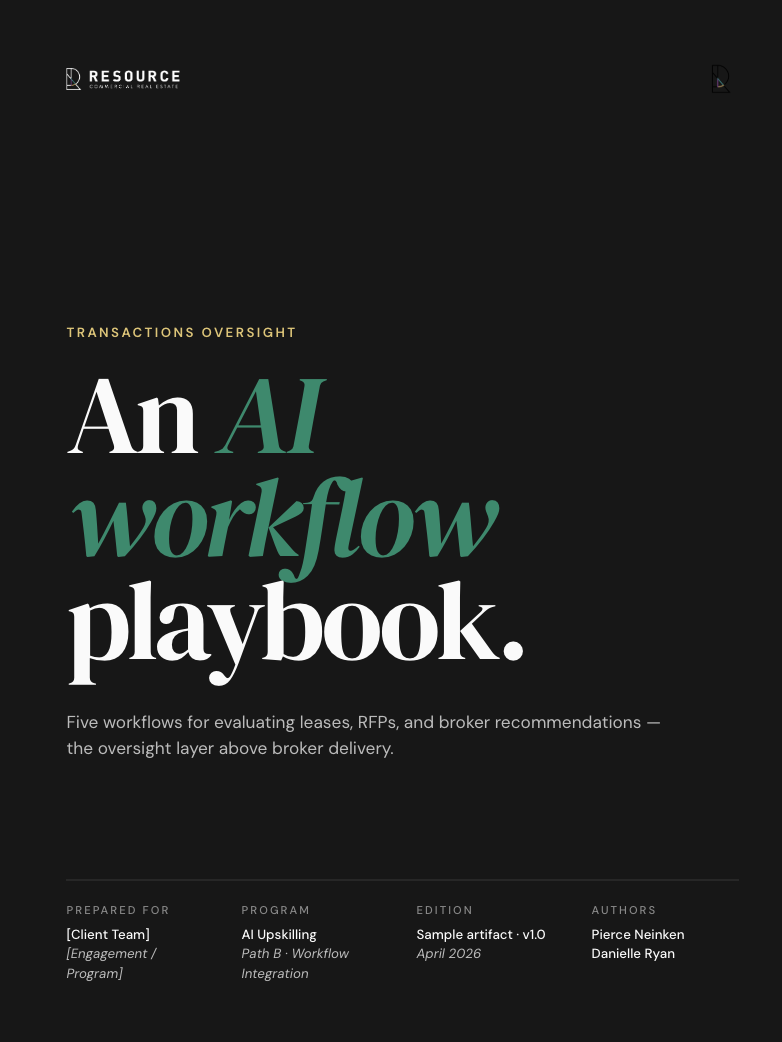
Transactions oversight edition

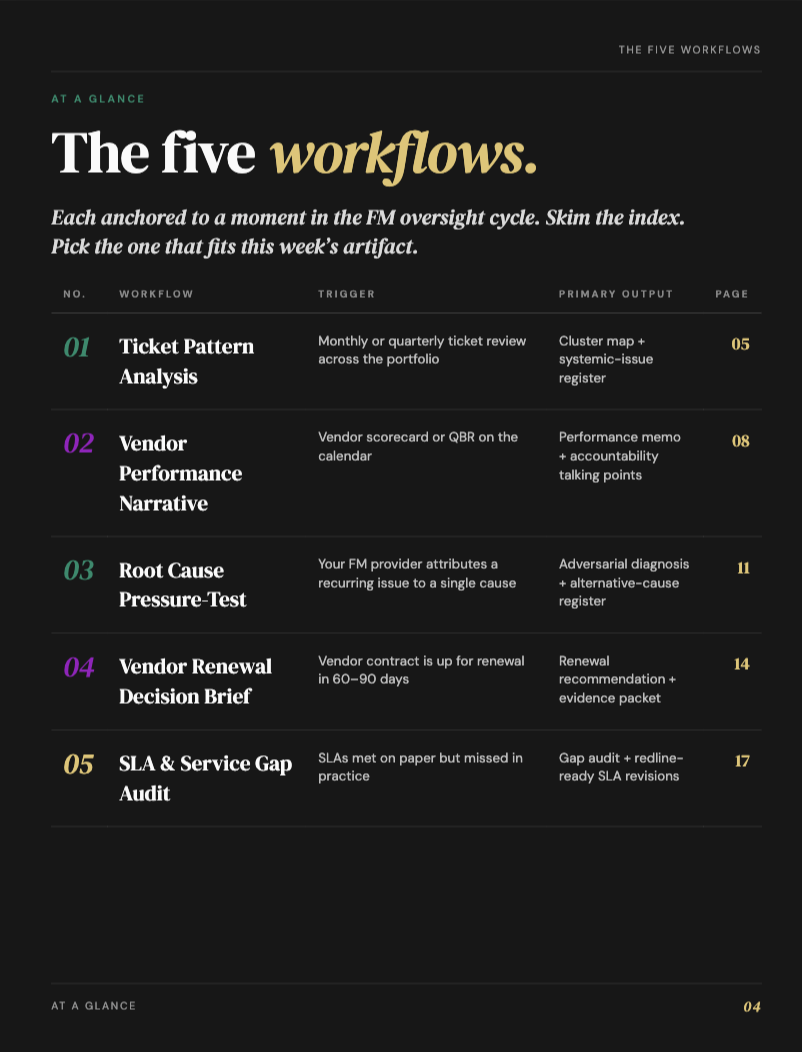
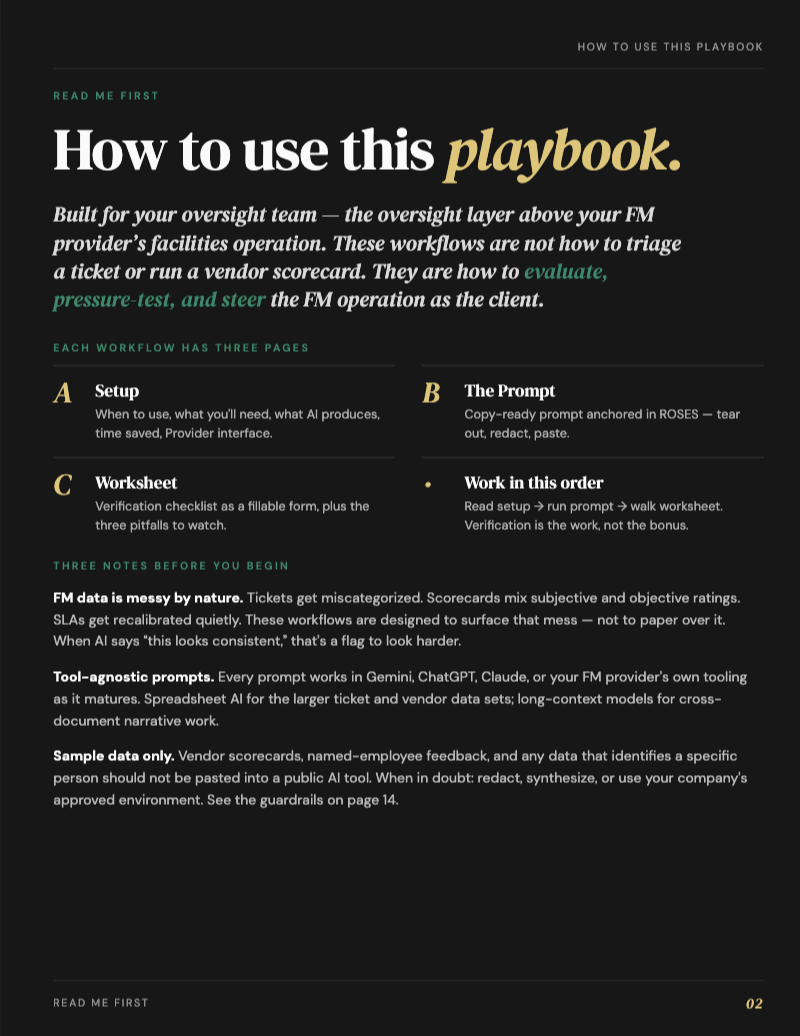
Facilities oversight edition

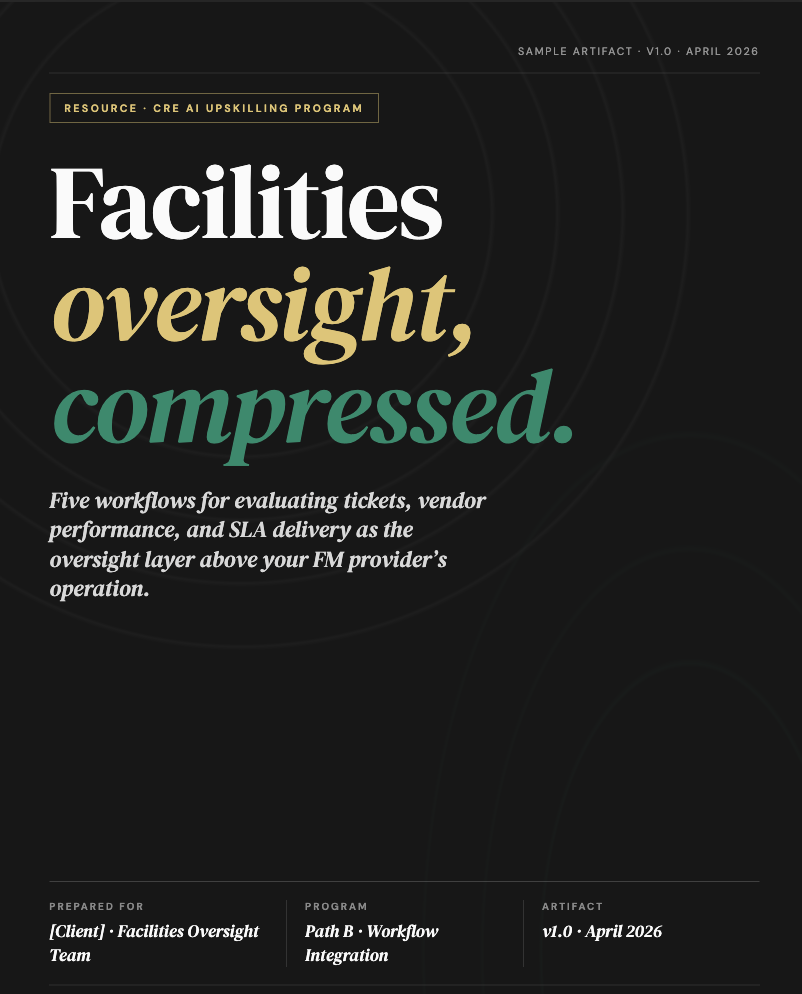
Six sample pages from the transactions and facilities oversight playbooks. Open any page to inspect it at full size.

How we work

Controlled by design. Useful in practice.

The method is built around the quality of the work—not the novelty of the technology.

01

Use approved information

Work inside the organization’s tool, access, confidentiality, and data-sensitivity boundaries.

02

Ground the output

Keep sources, assumptions, open questions, and required formats visible to the reviewer.

03

Keep judgment human

Place review and approval before consequential communication, commitments, or decisions.

04

Name the owner

Define who maintains the workflow, handles exceptions, and decides when the method changes.

05

Test representative work

Evaluate expected results and known failure cases before a workflow reaches daily operation.

06

Measure improvement

Track confidence, adoption, speed, quality, completion, and leadership visibility.

Why Resource

Built by corporate real estate practitioners.

ResourceAI is not a general technology course adapted for a real estate audience. The work is developed from end-user, advisory, portfolio, transaction, workplace, data, training, and AI curriculum experience.

  • CRE-specific from the first example
  • Adaptable to the organization’s approved AI environment
  • Grounded in sources, human review, and accountable decisions
  • Designed to move from learning into repeatable work
Meet Resource

Start with the work

What could your CRE team do better with AI?

Bring a team priority, a recurring workflow, or a learning goal. Resource will help frame the next useful step.

Discuss a CRE priority